
Standing in the Gap: The Call to Carry One Another’s Burdens

Updated: Feb 6
Scripture Focus: Romans 15:1–6 (KJV)
“We then that are strong ought to bear the infirmities of the weak, and not to please ourselves.”—Romans 15:1

In a world increasingly shaped by self‑interest, Paul’s words hit our hearts with both challenge and comfort. The Christian life is not a solo journey—it is a shared walk. The strong carry the weak, the mature support the struggling, and the body of Christ moves together so that God is glorified with “one mind and one mouth.”
Romans 15:1–6 gives us a beautiful framework for understanding what it means to stand in the gap for others—a theme echoed throughout all of Scripture, from Moses to Jesus Christ Himself.
The Heart of the Message: Christ Did Not Please Himself
Paul reminds us in verse 3:
“For even Christ pleased not himself…”
The entire mission of Jesus was self‑giving, interceding love.
He stepped into the gap sin created between God and humanity.
He took upon Himself the reproaches that belonged to us.
This is not simply an example—it is our calling.
The Ancient Pattern: God Uses Intercessors
When Moses stood between God and Israel in Psalm 106:23, he “stood in the breach” to stop judgment. This same idea appears all the way back in Genesis 3:15, where God foretells One who will step into humanity’s brokenness, crush the serpent’s head, and restore what sin destroyed.
Standing in the gap is one of God’s most consistent patterns of redemption.
The Problem: SIN is the Culprit
Before we can understand intercession, we must understand the crisis.
1. Sin Separates Us From God
Romans 3:23–26 shows that sin creates an uncrossable gap between God’s holiness and humanity’s brokenness.
No amount of effort or good works can bridge that divide.
2. Sin Brings Death and Judgment
Romans 6 teaches that the wages of sin is death.
Someone must intervene—someone without sin.
This is why we need a Savior…and why the world still needs believers who will intercede for others.
Standing in the Gap: What It Really Means
The phrase appears vividly in Ezekiel 22:30, where God says:
“I sought for a man…to stand in the gap before me…but I found none.”
God was looking for:
Someone who would pray
Someone who would intervene
Someone who would protect others from spiritual danger
Someone who cared enough to act
He still looks for such people today.
Let’s look at what standing in the gap includes:
1. Recognizing the Gap
Intercessors see:
Spiritual danger
Sin breaking families and communities
A world drifting far from God
People who cannot fight for themselves
They don’t look away. They step forward.
2. Intercession: Praying for Others
Paul urges in 1 Timothy 2:1–6 that prayers and intercessions be made “for all men.
”This includes:
Family
Leaders
Backsliders
The hurting
The lost
Intercessors pray with compassion, urgency, and persistence.
3. Advocacy and Mediation
Just like Moses pleaded for Israel, intercessors bring the needs of others before God.
But the greatest example is Jesus.
Christ Our Mediator
(Hebrews 9:14–15)He stands between us and judgment.
His blood opens the way back to God.
Christ Our Advocate
(1 John 2:1–2)He speaks on our behalf when we fail.
Christ Our Intercessor
(Romans 8:29–39)He prays for us at the right hand of God.
Every gap we stand in today is possible only because He stood in the greatest gap for us.
4. Sacrificial Love
Intercession is not always easy.
Sometimes it costs:
Time
Comfort
Reputation
Energy
Jesus said,
“Greater love hath no man than this, that a man lay down his life for his friends.”—John 15:13
Standing in the gap requires this kind of love.
5. Spiritual Warfare
Standing in the gap also means fighting spiritually.
Ephesians 6:12 reminds us that our battle is not against people, but against spiritual forces.
Intercessors:
Fight in prayer
Stand firm in faith
Protect others spiritually
Pray “with all perseverance” (Ephesians 6:18)
6. Restoration and Rebuilding
Intercessors don’t just pray—they help restore lives.
2 Corinthians 5:14–21 calls us “ambassadors for Christ” with the ministry of reconciliation. We help people:
Come back to God
Rebuild broken faith
Find new life in Christ
Become new creatures
Standing in the gap means helping people rise again.
Why Romans 15 Matters Today
Romans 15 calls us to:
Bear one another’s burdens
Build each other up
Live in unity
Reflect Christ’s love
Glorify God together
When we stand in the gap for others, we form a bridge of grace between their weakness and God’s strength.
We become living reflections of Christ’s love and sacrifice.
A Final Word: You Are Called to the Gap
God is still searching for intercessors.
For people who will:
Pray
Love
Carry burdens
Fight spiritually
Restore the broken
Reflect Christ
Standing in the gap is not reserved for the spiritually elite—it is the everyday calling of every believer filled with the Spirit of Christ.
As Romans 15:5–6 declares, when we walk in this unity and love:
“…with one mind and one mouth [we] glorify God.”
May God raise us up as people who stand in the gap—for our families, for our church, for our communities, and for a world in desperate need of Jesus.
Do you desire prayer?
Do you desire salvation?
If you want to know Christ—and be known by Him—today is the day.
“Now is the accepted time; behold, now is the day of salvation.” - 2 Corinthians 6:2
I can help you with a prayer, Scripture guidance, or steps to salvation—just let me know how you’d like to continue.
“3 Jesus answered and said unto him, Verily, verily, I say unto thee, Except a man be born again, he cannot see the kingdom of God. 4 Nicodemus saith unto him, How can a man be born when he is old? can he enter the second time into his mother's womb, and be born? 5 Jesus answered, Verily, verily, I say unto thee, Except a man be born of water and of the Spirit, he cannot enter into the kingdom of God.” - John 3: 3-5

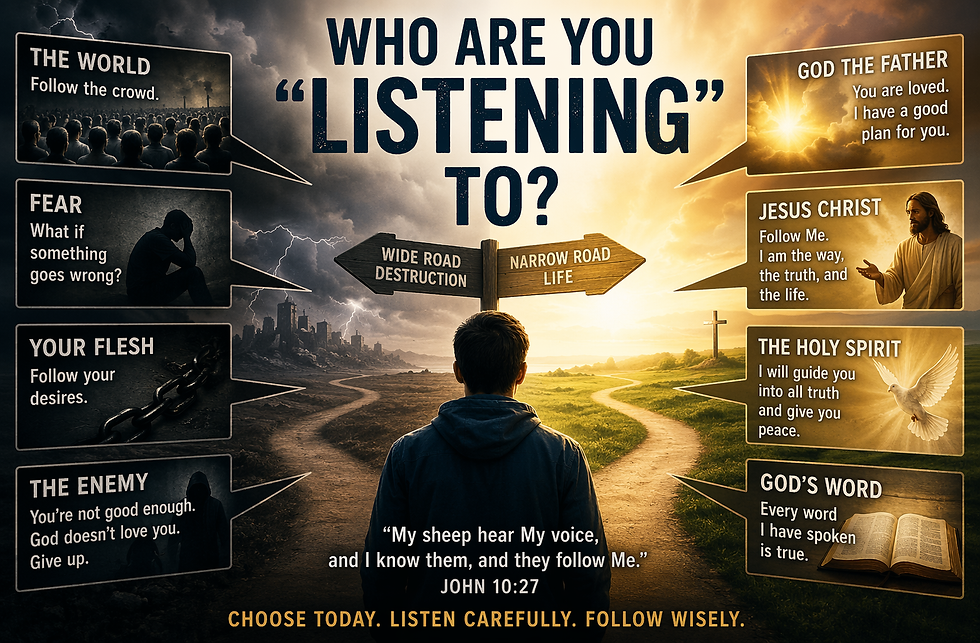

Thank you Jesus for your word, if not for your word showing us the way to salvation we would still be in darkness.
Excellent message love b it.